


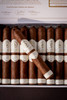
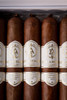

Product Description
WHY YOU CANT PURCHASE THIS YET?
Thank you so much for your interest, but the cigars have not arrived yet to South Africa.
We are expecting to have stock in April.
The price displayed is an estimate.
——-
Why is this cigar special?
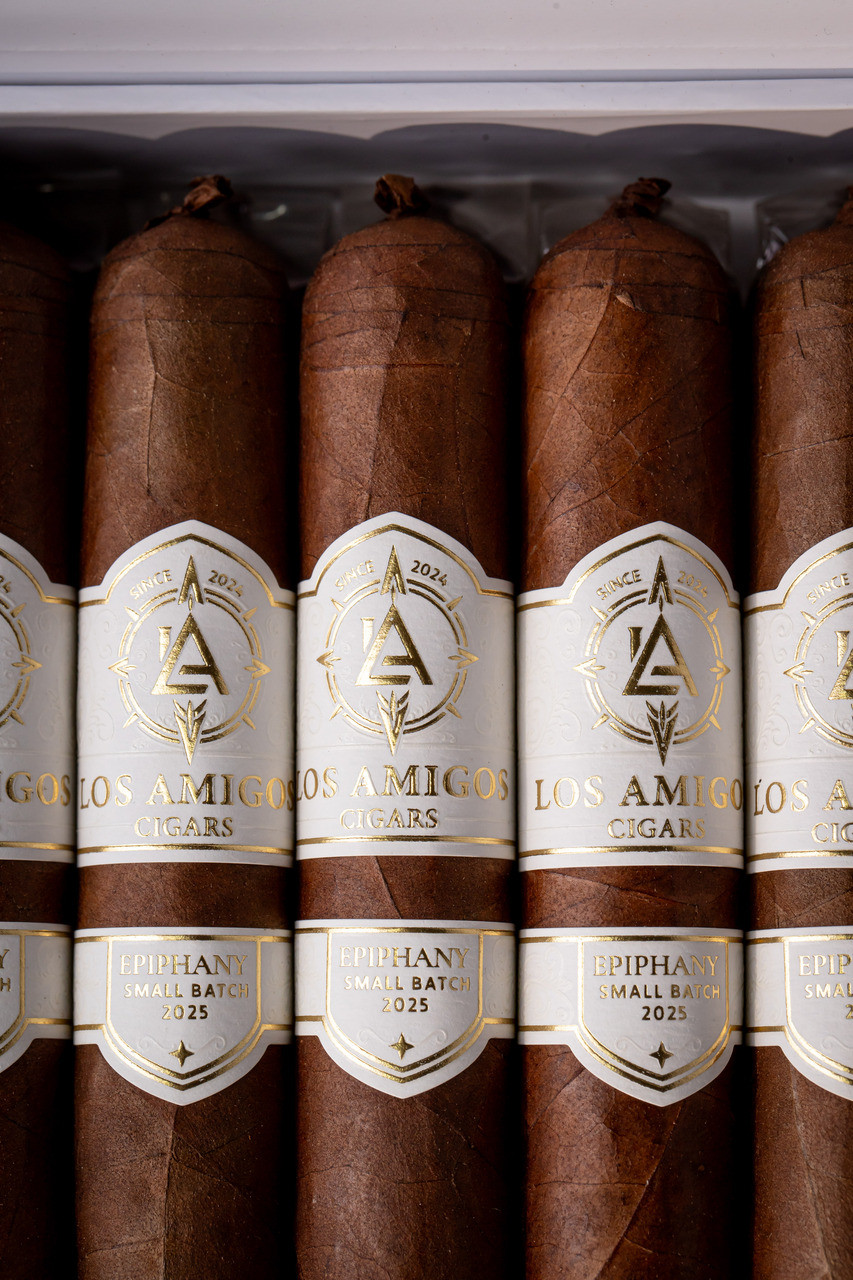
These cigars are special because they are the result of a true friendship project, crafted slowly and deliberately over two years by myself and two friends. Three countries joined in a journey: myself from South Africa, Walter Saes from Brazil, and Eduardo Lahsen from Chile. Together we visited multiple factories, evaluated countless samples, and fine‑tuned blends until we found profiles that genuinely awakened our senses and felt distinct from what you usually find on the shelf.
Los Amigos Cigars was born from that journey. A brand built on time, travel, shared passion, and an obsession with details rather than shortcuts. Every cigar is meant to tell that story of friendship and exploration in the way it looks, draws, and tastes—a cigar made by friends, for friends, to be enjoyed in good company.
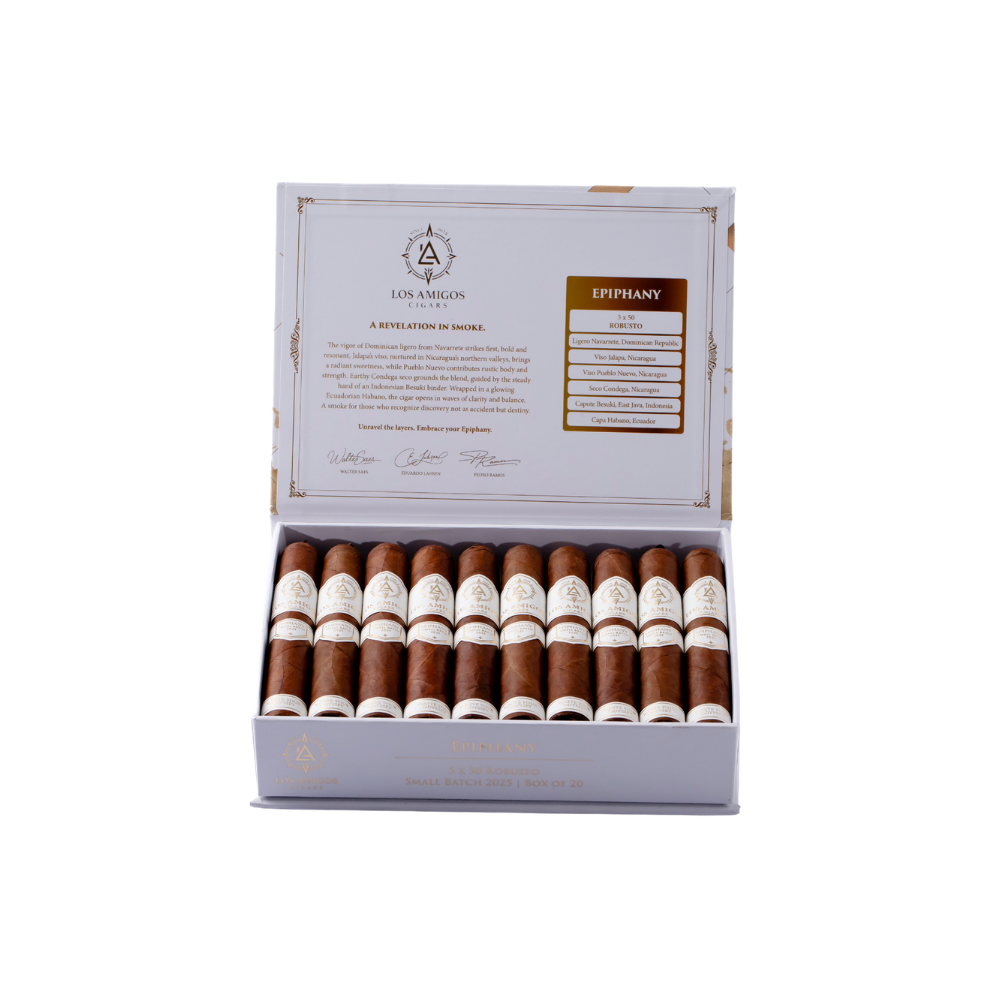
A REVELATION IN SMOKE.
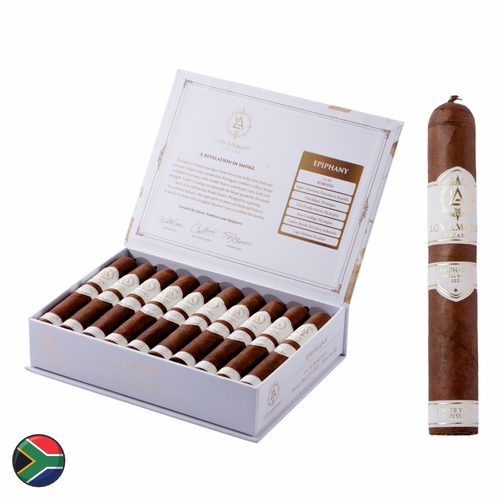
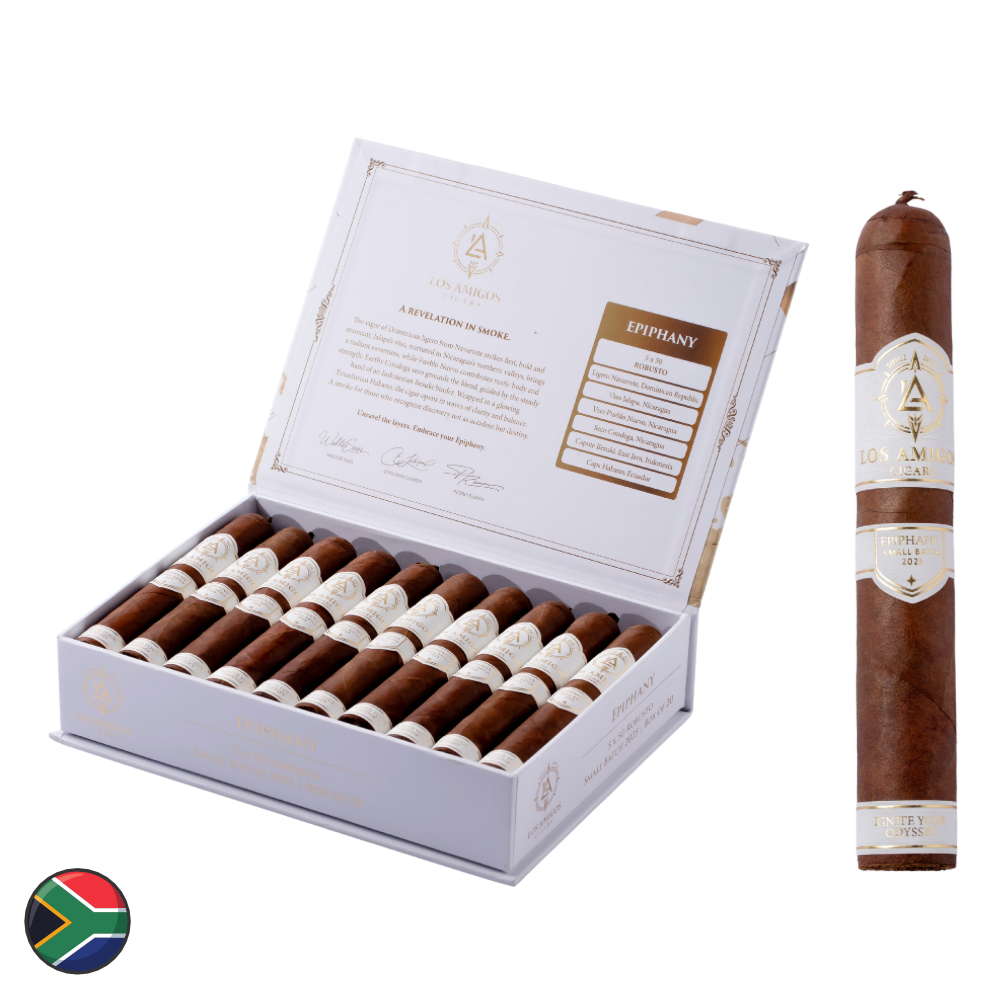
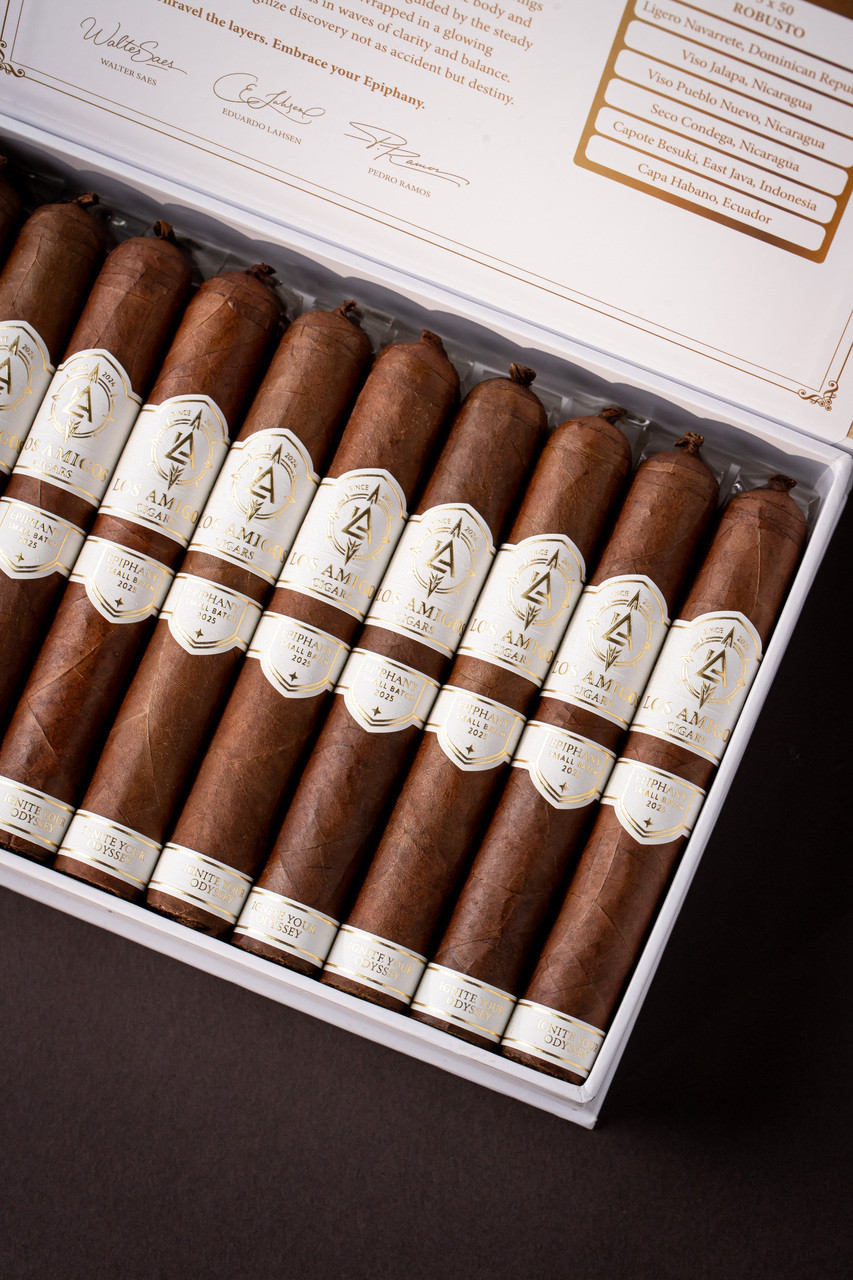
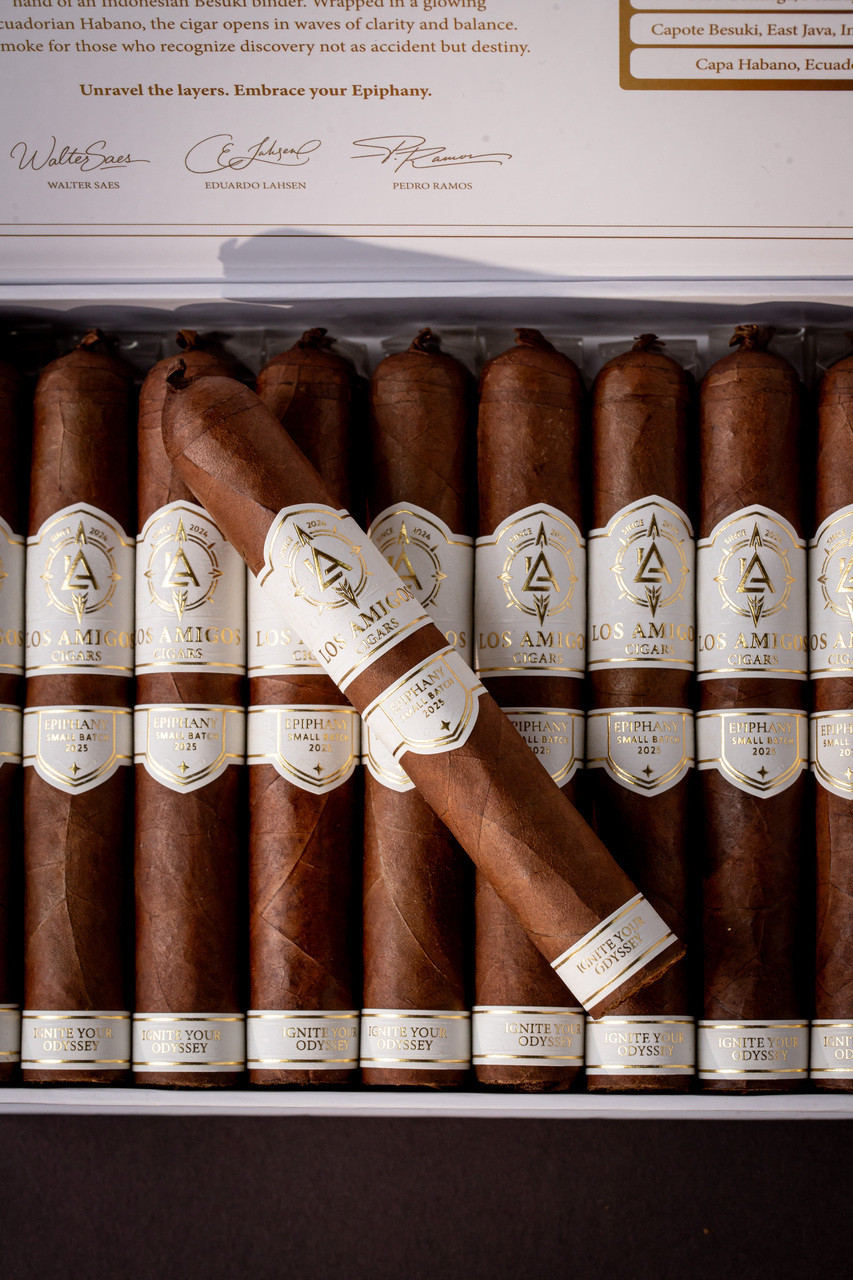
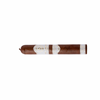
The vigor of Dominican ligero from Navarrete strikes first, bold and resonant. Jalapas viso, nurtured in Nicaraguas northern valleys, brings a radiant sweetness, while Pueblo Nuevo contributes rustic body and strength. Earthy Condega seco grounds the blend, guided by the steady hand of an Indonesian Besuki binder. Wrapped in a glowing Ecuadorian Habano, the cigar opens in waves of clarity and balance.
A smoke for those who recognize discovery not as accident but destiny.
Expect a mild to medium cigar full of unique flavour that will move your inner thoughts.
Unravel the layers. Embrace your Epiphany.
Here is a full description of the recipe of our blend in order to open the consumer to learn how the different terroirs bring to a blend:
Wrapper: Ecuadorian Habano
• Typically medium‑full in flavor with peppery spice, toasted cedar and a touch of natural sweetness.
• You can expect black pepper on the lips and retrohale, warm wood, light coffee/cocoa and a slightly oily, creamy texture as the wrapper drives the first impression.
Binder: Indonesian Besuki
• Thin, elastic, mild‑to‑medium leaf that burns well, adding dry earth, light wood and a gentle, incense‑like aromatic spice.
• As a binder it smooths the blend, keeps the profile from getting too heavy or muddy, and adds a subtle perfumed nuance around the more robust filler and wrapper notes.
Filler: Dominican Ligero
• Top‑priming leaf that brings body, strength and concentrated flavor.
• Expect a backbone of power with black/red pepper, leather, dense earth and a touch of dark dried fruit, especially as you move into the middle and final third.
Filler: Nicaraguan Jalapa Viso
• Jalapa tends to be sweet, aromatic and refined, less aggressive than Estelí.
• As viso it contributes medium strength, creamy mouthfeel and notes of sweet wood, gentle earth and maybe vanilla/cream, rounding off the sharper edges of the ligero and supporting the wrapper’s sweetness.
Filler: Nicaraguan Pueblo Nuevo Viso
• Pueblo Nuevo leans rustic and mineral, with solid earth and a slightly gritty texture.
• In viso form it adds medium body, dark grain/bread and soil notes with a bit of pepper, reinforcing the mid‑palate so the cigar feels substantial without just piling on spice.
Filler: Nicaraguan Condega Seco
• Condega is generally medium‑bodied with a mix of earth, wood and soft sweetness.
• As seco it supports combustion and brings approachable flavors of earth, cedar, mild cocoa and baking spice, adding a friendly sweetness and aromatic wood that keeps the blend balanced.
How this robusto should smoke
• Strength and body: solid medium‑full, but not a bruiser; the Dominican ligero provides punch, while Jalapa viso and Besuki keep it civilized and smooth.
• Flavor profile: initial hit of Habano pepper and cedar; core of sweet wood, earth and light cocoa from Jalapa/Pueblo Nuevo/Condega; retrohale with baking spice, vanilla/cream hints and a faint incense note from the Besuki.
• Texture and progression: starts creamy‑sweet and peppery, then shifts into deeper earth, leather and spice in the second half as the ligero and Pueblo Nuevo assert themselves, finishing drier and slightly toasty from the Besuki and Condega seco